

“Children are educated by what the grown-up is and not by his talk.”
Carl Jung
Parental control software has undoubtedly revolutionized the way parents supervise their children’s online activities. While it has made it easy to monitor kids online, relying solely on parental control tools and tech tools can be a disastrous mistake.
Interview Excerpt: In interviews with digital parents their concerns about their children’s technology usage were candidly revealed. A senior teacher and a parent, Mr. Amit, expressed his constant anxiety about his daughter’s constant online interactions. Though he has installed parental control, yet can not stop worrying about the kind of content she is consuming and people she is interacting with online. Ms.Jyoti, a mother of 12-year-old twins, shared her worries about her children’s gaming addiction that is hindering their limited physical activities, and also cognitive functioning. To know more about Digital Parenting read my previous article Digital Parenting – A Cause of Stress Among Office-Going Parents
Our virtual world is a three layered structure
- Hardware structure – Hardware of the devices
- Networking – It also include software and applications that we use
- Cyber persona – i.e. Humans most important and vulnerable layer
Parental control tools only work on the 2nd layer of the whole structure. In cyber persona layer humans are as vulnerable as a lamb with her mother in a open jungle.
Indeed parental control give some sort of security. But it has its own set of restrictions and drawbacks that need consideration.
The Limitations of Parental Control Software
While parental control software provides a solid foundation for digital parenting, it is vital to acknowledge its limitations to avoid relying solely on these tools. Some of the significant limitations include:
1. False Sense of Security

A biggest misconception Parents develop a false sense of security, assuming that the software alone can protect their children entirely from online risks. You never know what is waiting next side of the screen for your children. Without proper knowledge and skill, this misconception may lead to a lack of vigilance and open communication about potential dangers.
2. Technical Glitches and Bypassing
Parental control software, like any technology, is not error free. Technical glitches may occur. With advancement in technology, it is not tough for tech savvy children to find ways to bypass the restrictions through new AI tools and tricks. Overcoming the intended protective measures has become easier for them.
3. Over blocking and Under blocking
Parental control software often uses predefined categories for content filtering, leading to instances of over blocking (blocking harmless content based on a few key words) or under blocking (allowing access to inappropriate content). These inaccuracies can frustrate children and hinder their access to valuable educational resources or may sometimes give them access to inappropriate content.
4. Impact on Privacy
Constant monitoring through parental control software may raise concerns about privacy of children, causing strains in the parent-child relationship and affecting the child’s sense of trust.
Why Relying Only on Software Isn’t Enough
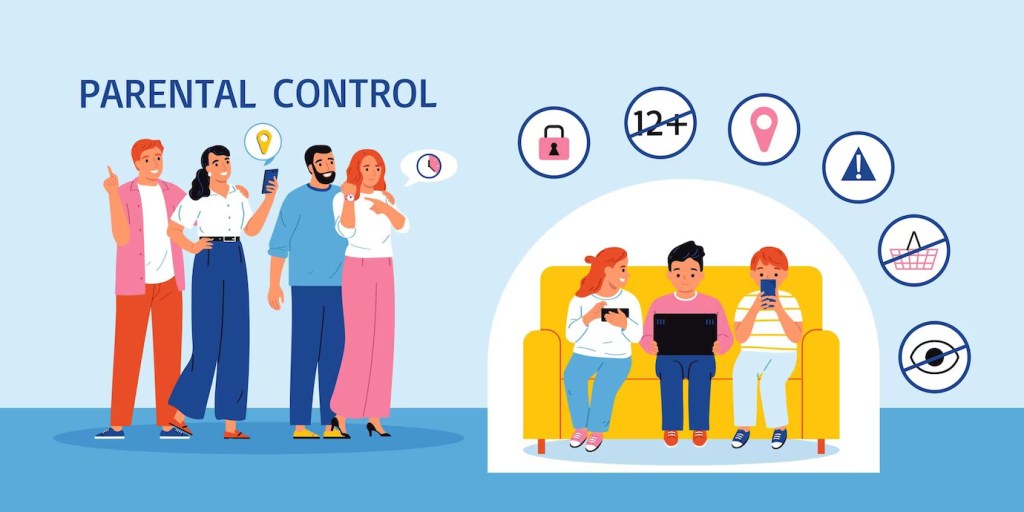
- It is crucial to understand that parental control tools have limitations. While it may provide some level of control over the devices, it fails to instigate any behavioral change that fosters responsibility in children. As we all know, children are naturally curious and tend to explore and experiment with anything new they encounter. Once they discover the presence of such monitoring software on their devices, it becomes highly likely that they will attempt to evade or disable it.
- Children’s social circles and interactions pose another challenge for parental control software. In a typical week, they spend time with various people, including friends, grandparents, and relatives. This exposes them to a variety of devices, making it easy for them to bypass the software’s restrictions and controls.
- The long-term consequences of relying solely on parental control software can potentially be disastrous. While it might offer a temporary sense of security, it may lead to a false belief that children are entirely protected online. In reality, they may be inadvertently exposed to risks and dangers as they find ways around the software’s limitations.
How it affects the parent-child relationship

By installing the software on your child’s devices you can make sure to collect updates and even restrict a few of the websites and applications. However, if we dive into the psychology of the parent-child relationship. The most important characteristics of a parent-child relationship are the love and trust that the parents have for their children. The very foundation of this relationship is trust.
Lets dive into how using parental control in the long run, makes it easy to fall prey to overusing and running your relationship.
1. Reduced Autonomy and Independence
Excessive use of parental control software may limit a child’s autonomy and sense of independence. Over-policing their online activities can inhibit their ability to make responsible decisions and learn from their mistakes.
2. Emotional Well-Being
Intrusive monitoring and strict limitations imposed by parental control software can negatively impact a child’s emotional well-being. They may feel stifled and controlled, leading to increased stress and anxiety.
3. Trust Issues
Constant monitoring and surveillance through parental control software can erode the trust between parents and children. Children may feel that their parents do not trust them or respect their boundaries, leading to resentment and rebellion.
5. Social Development
Excessive online restrictions may hinder a child’s social development, as they might miss out on age-appropriate interactions and experiences with peers.
How does it affect the mental well-being of the child in the long run?

Anger Management issues
Studies indicate that strict and intrusive parental monitoring can contribute to adolescents feeling intruded upon, leading to lower levels of trust and communication between parents and children (Dettore & De Angelis, 2018; Chein et al., 2011). Additionally, research by Kalmus et al. (2018) highlights how parental restrictions on internet usage can be linked to higher levels of secretive online behavior among adolescents.
Self esteem issues
In a study by Gámez-Guadix et al. (2016), it was found that adolescents who experienced higher levels of parental control had a greater likelihood of engaging in problematic internet use and externalizing behaviors. Moreover, excessive parental control was associated with lower self-esteem and a higher risk of developing emotional and behavioral problems (Rosen et al., 2008).
Coping Mechanisms and Skill Development
Self-esteem issues can hinder the development of healthy coping mechanisms and life skills. Children who feel incapable due to their lack of autonomy may struggle to develop effective problem-solving skills and adaptive strategies to handle challenges.
So what’s the solution ?

For digital parenting to be truly effective, it requires a comprehensive approach that goes beyond relying solely on software solutions. Open communication, education about responsible online behavior, imparting Internet Maturity skills and fostering mutual trust are vital components of a successful digital parenting strategy. Parents must actively engage with their children, teaching them how to navigate the digital landscape responsibly and equipping them with the skills to make sound decisions on their own.
A Holistic Approach to Digital Parenting
Guiding children in the virtual world is much more of a skill than just a one or two-day discussion. To empathize with their online world you yourself have to develop Internet maturity skill set.
Walk your Talk
Become a digital leader for your children. Talk to them and understand their online life. Try to get into their zone. Analyze your own digital habits and digital addiction, be it social media, streaming, or messaging platforms etc. Children are naturally curious, always learning by watching and saliently observing your behavior so be aware.
Digital Detox
Foster healthy digital habits by promoting balanced screen time and setting an example of disconnecting from devices when necessary. Decide the timing of using devices in your bedroom, dinner table etc. Inculcating a culture of digital detox at home entails practicing wholesome digital behaviors.
Educate them and yourself

Picture by Freepik
Internet maturity education is a tool. Educate them about safe and respectable use of the internet. Let them know the difference between positive and negative online reputation. How their positive digital footprint can create a bright future with immense opportunities. But a negative one can ruin their future.
These are some resources to help you learn with your children
- learn to protect your children online – https://consumer.ftc.gov/identity-theft-and-online-security/protecting-kids-online
- Make them responsible –https://www.fbi.gov/how-we-can-help-you/students
Open Communication
Maintain open channels of communication, so your children feel comfortable discussing their online experiences and concerns. Building trust is crucial to nurture this bond between parent and children. You can do it by respecting your child’s boundaries and allowing them some autonomy in their online activities.
Develop Skills
Encourage the development of problem-solving skills, critical thinking, and decision-making abilities to help your child navigate the online world wisely. Encourage them to diversify their social groups, which will lead to diversify their thoughts and ideas.
Imparting online netiquettes
Etiquettes of the virtual world aka Netiquettes, are some of the most humane things one should have while suffering online. Being a responsible digital parent it’s your duty to teach this to your children.
Remember, parenting in the digital world is about being there for your kids, teaching them, and giving them space to grow – just like in the real world.



 CYBER ZEN
Leave a comment