
As technology continues to evolve, so does the potential for both progress and control.
ChatGPT
Imagine a character that watches your every move, records your every thought, and manipulates your reality – sounds like something out of a sci-fi thriller, right? Well, meet ‘Big Brother,’ the master of totalitarian regime, Surveillance, Data Collection, and Information Manipulation from George Orwell’s ‘1984.’ Now, here’s the eerie twist: this same Big Brother has quietly slipped into our lives once again, this time masked as the algorithms steering our social media feeds and technology. In a world, where your online preferences shape what you see and believe. The parallels between Big Brother and today’s algorithms are too uncanny to ignore. Let’s take a journey into how this haunting resemblance is affecting our present and what it means for our digital future.
The Unsettling Truth: How Social Media Algorithms Reflect Big Brother’s Watchful Gaze from Orwell’s ‘1984’
Surveillance and Monitoring: A Haunting Similarity

Just as Orwell’s Big Brother kept a watchful eye on citizens, contemporary social media algorithms meticulously observe users’ online activities, engagements, and choices. While Big Brother’s surveillance was overt, today’s tracking operates subtly through our interactions with digital platforms.
When you browse your social media feed and notice that the content seems tailored to your interests, you’re witnessing the result of algorithmic surveillance. For instance, platforms like Facebook use algorithms to prioritize posts from friends and pages you frequently engage with, creating a personalized echo chamber of content.
Our clicks shape an intricate map of our preferences, enabling algorithms to anticipate our desires and influence our digital experience.
Study : A 2020 study by the Pew Research Center found that 64% of Americans believe that their online activities are being tracked by advertisers and technology companies. This constant surveillance shapes the content that users are exposed to, leading to personalized experiences driven by algorithmic predictions.
The Data Collection Paradox
Orwell’s party collected data to maintain control over citizens, mirroring the data-driven approach of today’s algorithms. In ‘1984,’ data served authoritarian ends, while today, if Ever searched for a product online and then suddenly saw ads for the same item on various websites and social media platforms? This isn’t a coincidence data fuels the personalization of content and advertisements. Our clicks are not merely random actions; they contribute to a wealth of information that platforms harness to curate our digital surroundings.
Study : A study published in the journal ‘Nature Human Behaviour‘ in 2019 highlighted that algorithms analyzing user data can predict individual preferences with high accuracy. This data-driven personalization enhances user engagement but also raises concerns about the extent of data collection and its potential misuse.
A Loss of Privacy: Trading Comfort for Control
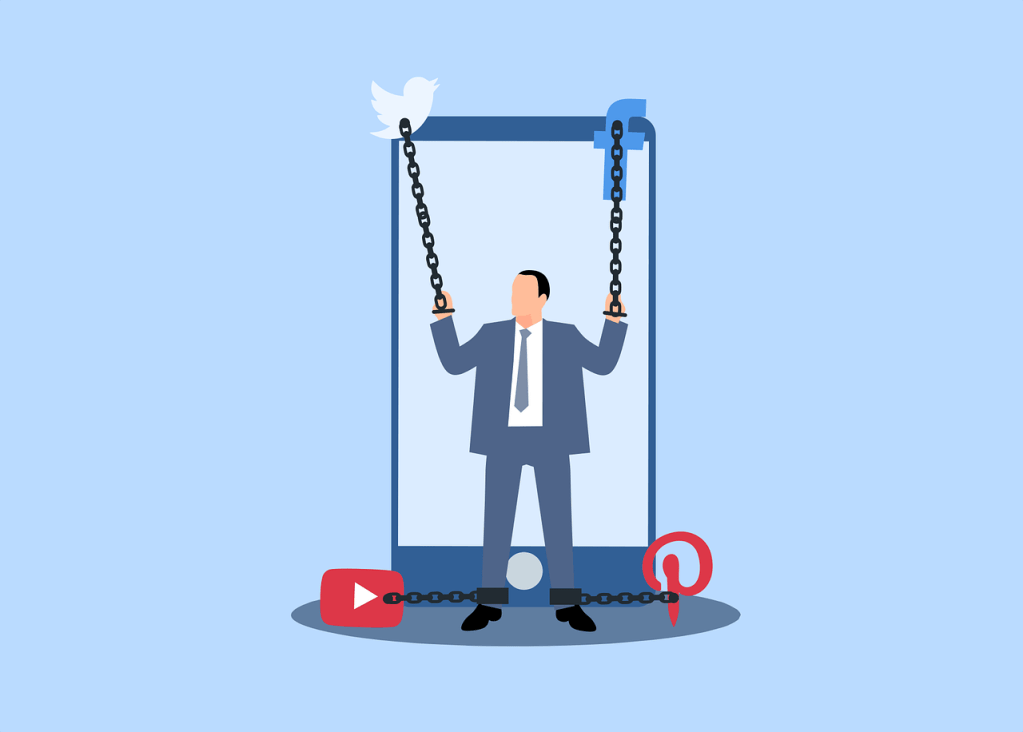
The erosion of privacy is a shared trait between Orwell’s world and ours. Consider the information you willingly share on your social media – your location, interests, relationship status, and more. These details contribute to algorithms’ ability to understand you and create content that aligns with your preferences.. Algorithms exploit this openness to tailor content delivery. This exchange of privacy for convenience resonates with the novel’s themes, where privacy was a scarce commodity traded for societal order.
Study : A study conducted by Kaspersky in 2021 revealed that 57% of users are uncomfortable with the amount of data collected about them online. Despite this discomfort, users often continue to engage with platforms, inadvertently surrendering their personal information in exchange for seamless experiences.
Shaping Reality: Manipulation of Information
In ‘1984,’ the party manipulated historical records to maintain control over truth. Similarly, algorithms can prioritize certain content over others, potentially molding users’ perspectives and knowledge. The digital realm becomes a reflection of the novel’s dystopian society, where information was not a fact but a malleable concept.
Study: A research paper titled “The Filter Bubble: What the Internet Is Hiding from You” by Pariser (2011) discusses how algorithms create filter bubbles, limiting exposure to diverse viewpoints. This algorithmic curation shapes the information landscape and influences users’ understanding[ of reality.
The Echo Chamber Effect
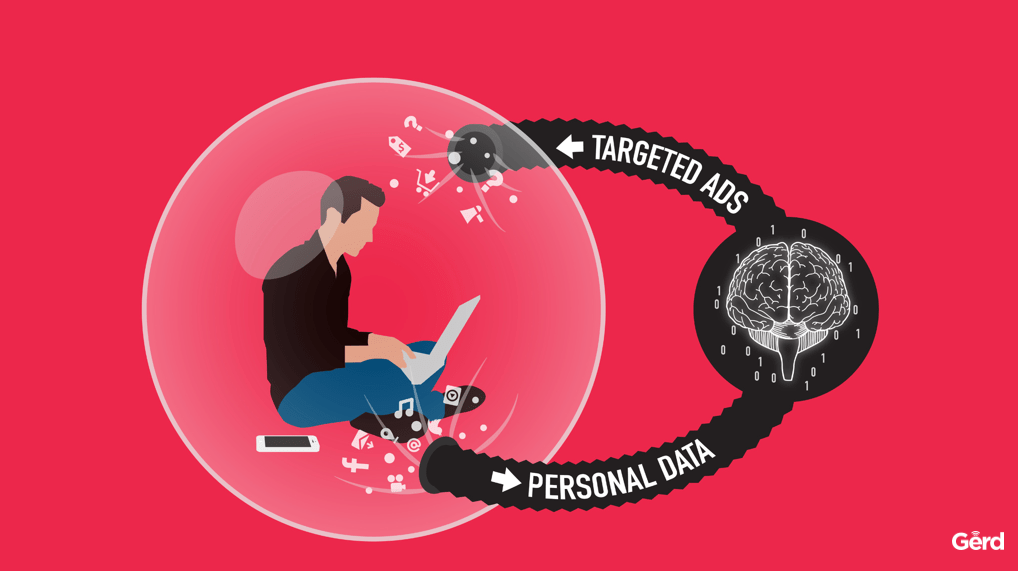
Both Orwell’s world and today’s digital landscape give rise to echo chambers, spaces where individuals are exposed only to ideas that reinforce their existing beliefs. In ‘1984,’ this reinforced conformity, while in the digital age, it contributes to the polarization of societies, hindering meaningful dialogue and understanding.
Study: A study published in the Proceedings of the National Academy of Sciences in 2018 explored the phenomenon of echo chambers on social media platforms. The study found that users are more likely to engage with content that aligns with their existing beliefs, leading to the amplification of ideological divisions.
Diminishing Critical Thinking
Social media platforms prioritize content that garners high engagement. If users engage more with sensational or emotionally charged content, the algorithm will show more of the same, potentially steering you away from balanced, thought-provoking content. Orwell depicted a society devoid of independent thought, a concept mirrored in the digital realm by algorithms tailoring content to users’ existing preferences. By limiting exposure to diverse viewpoints, algorithms inadvertently discourage critical thinking, drawing a concerning parallel with the thought control mechanisms in ‘1984.’
Study: A study published in the journal ‘Information, Communication & Society’ in 2016 discussed the potential negative impact of algorithmic content curation on critical thinking. The study emphasized that algorithmic filtering can create cognitive biases and hinder users’ ability to evaluate information objectively.
Manipulation Redefined
Just as Orwell’s party used propaganda to manipulate citizens, algorithms subtly influence user behavior by suggesting content, products, and even shaping political decisions. The distinction between external manipulation and self-determined choice becomes blurred as we navigate an online landscape carefully curated by algorithms.
Study: A study published in the journal ‘Proceedings of the National Academy of Sciences’ in 2014 examined how emotions can be spread through social networks via algorithmic exposure. The study’s findings underscore the potential of algorithms to impact user emotions and behaviors.
Erosion of Trust and Information Integrity
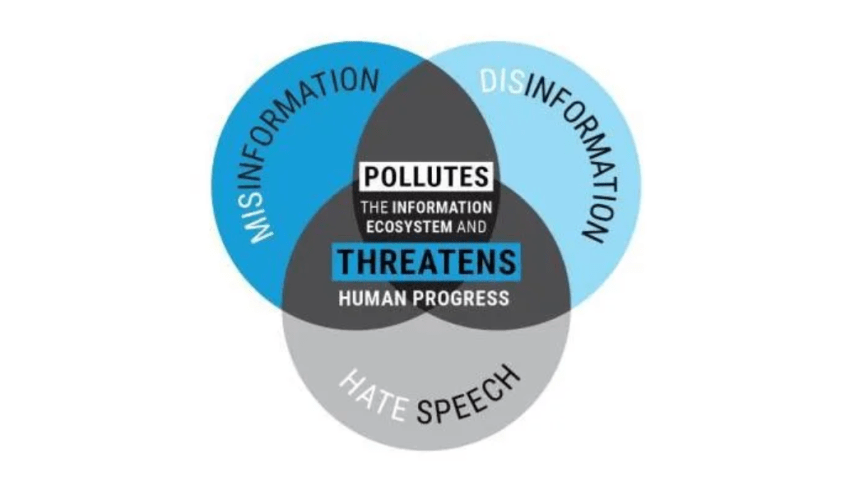
“false information that is disseminated intentionally to cause serious social harm”. Disinformation is described by the United Nations Educational, Scientific and Cultural Organization (UNESCO) as false or misleading content that can cause specific harm, irrespective of motivations, awareness or behaviors.
The viral spread of conspiracy theories, unverified claims, and doctored images on social media platforms highlights the challenge of maintaining information integrity. Such instances undermine the credibility of online information sources. In ‘1984,’ the party distorted truth to maintain control, akin to the distortion of facts in today’s misinformation-laden digital environment. The spread of fake news erodes trust in institutions, much like the party’s manipulation of information erodes trust in reality. The challenge of discerning truth from falsehood becomes an inherent struggle.
Study: A study conducted by the Reuters Institute for the Study of Journalism in 2020 found that people’s trust in news and information sources is declining due to the proliferation of misinformation on social media platforms. Algorithms contribute to the dissemination of both accurate and false information, blurring the lines between reliable sources and unreliable ones.
The Isolation Paradox

Picture credit : Pixabay
Spending hours scrolling through social media feeds might create an illusion of connection, but studies show that excessive social media use can lead to feelings of loneliness and isolation, as it replaces meaningful face-to-face interactions. Orwell’s society was marked by isolation, where personal connections were scarce. Paradoxically, our hyper-connected digital age, driven by algorithms, has also led to increased social isolation. As the sense of genuine human connection diminishes, echoing the themes of detachment in ‘1984.’
Study: A study published in the American Journal of Preventive Medicine in 2017 linked high social media usage to increased feelings of social isolation among young adults. The study suggested that excessive use of social media, driven by algorithmic content delivery, can lead to a sense of disconnection from real-life relationships.
Navigating the Algorithmic Landscape: Future Concerns
As algorithms continue to evolve, concerns about algorithm awareness, transparency, and ethical considerations come to the forefront. The unintended consequences of algorithmic decision-making, such as filter bubbles and algorithmic bias, mirror the complexities faced by citizens in ‘1984.’ Striking a balance between technological advancement and ethical use of algorithms is crucial for shaping a positive digital future.
Study: A study published in the journal ‘Science‘ in 2018 demonstrated that certain algorithms used in healthcare settings exhibited racial and gender bias, potentially leading to unequal treatment. This study underscores the importance of scrutinizing algorithms for biases that could perpetuate societal inequalities.
Unforeseen Outcomes of Algorithmic Complexities
Protagonist, Winston, ignited a rebellion with unforeseen consequences. Similarly, the intricate nature of algorithms could lead to outcomes that were never intended. This unpredictability poses challenges as we navigate a digital world where the consequences of our clicks are far-reaching and potentially profound.
Study: A study published in the journal ‘Nature Communications’ in 2020 discussed the challenges of predictability and control in complex systems, drawing parallels to algorithmic decision-making. The study highlighted that even well-designed algorithms can produce unintended outcomes due to their interaction with complex environments.
The Battle for Controlled Narratives
In both realms, the control of information distribution shapes public narratives. In the digital age, algorithms wield similar influence, determining which information reaches users, thereby shaping perspectives and potentially consolidating power in the hands of tech giants.
Study: A study published in the ‘Journal of Communication’ in 2019 discussed the power dynamics in algorithmic content curation. The study emphasized that the algorithmic selection of information influences users’ perceptions of reality and their understanding of social issues.
Algorithm Awareness and Ethical Considerations
The increasing prevalence of algorithms in our lives demands greater algorithm awareness and ethical considerations. Just as citizens in ‘1984’ were unaware of the extent of surveillance, many users today are unaware of how algorithms shape their online experience. Calls for algorithmic transparency and accountability echo the need for ethical considerations in technology-driven societies.
Confronting the Parallels
In summary, the uncanny parallels between Orwell’s ‘1984’ and the contemporary algorithm-driven digital world are impossible to overlook. From surveillance and data collection to manipulation of information and societal impacts, the echoes of dystopia reverberate through the fabric of our digital existence. While technology empowers us, it also challenges us to safeguard our privacy, autonomy, and the integrity of information.
Reflecting on Our Path Forward
The profound words of Thomas Jefferson, “The price of freedom is eternal vigilance,” resonate more than ever in a world where clicks shape our reality. The prescient observation by Marshall McLuhan, “We shape our tools, and thereafter our tools shape us,” is a call to introspection as we navigate the intricate interplay between technology and society. As we continue to embrace the potential for progress, let us not forget the lessons of ‘1984’ and strive to ensure that our clicks empower us, rather than control us.
About the blog
Join CyberZen on this transformative journey, where CyberWisdom unravels the digital maze, leading to a conscious, compassionate, and connected global community. Don’t forget to follow me on:
Newsletter
Subscribe to my email newsletter for the knowledge that equip you with to take control of your digital life.
Designed with WordPress.com



 CYBER ZEN
Leave a comment