Tag: Internet Maturity

  • Title Less blog 2

    Title Less blog 2

    Know how reels make you emotionally fat 

    It soothes us, fixes us and is as tasty and satisfying for my urges as it needs to be. It is the YouTube, shorts, the Instagram and Facebook reels .

    The urge to get see one more of it, and the inner voice saying, “no this reel is irrelevant, i just want one more of a relevant one.”

    “10 best moments in The Office, where actors weren’t acting.” or

    “10 times when Phoebe was relevant in friends” or

    “10 best quotes from Tate Brothers to become rich.”

    “Are you suffering from ADHD, 5 signs.”

    “My life as ADHD.”

    “Self care tips you are missing, or not”

    “Amazon gadgets that are more satisfying than useful.”

    “10 rifles which are almost illegal to own.”

    “10 best stoic quotes to change your life.”

    “How to become Sigma in 3 steps.”

    Every single title may or may not be relevant to you, but we all in the heart knows that, we wished these titles were reels right now and we could have at least thought of seeing something useful.

    In the era of information, shorter and crisper content is appreciated, promoted and acknowledged by the individuals, society and industries but not by academia, national and international policies and business strategies.

    Today let’s explore the world of reels with a skeptical view to confirm the already known boring fact, “Yes they are bad for You.” 

    Reels – introduction 

    In the age of technology where we are constantly bombarded with information mostly irrelevant information in the form of bite size content that is easy to get engaged but very hard to disengage. 

    Yes I am talking about shorts or reels, that you often time swipe, watch and without realizing repeating it till your eyes gets exhausted.

    Till now you have seen so many reels that even while reading this you can imagine me writing this article in the form of a reel. Reels are the short form content mostly in the video format. They are medium for modern day storytelling. In the snappy video of 30-60 sec, people tell stories, sing songs, recite poetries, record their best dance moves and do anything one can think of. 

    The audio is played in the background isn’t just background music. The music is specially selected to keep you hooked to grab your attention. Reels are a perfect tool for short term attention grabbing 

    Components of a reel 

    There are three parts of a reel that makes it irresistible 

    1. Video 
    2.  Attention grabbing music 

    Algorithm – The soul of modern day social media.   Algorithm is the angel as well as the demon of your life simultaneously.  Lets try to understand it in simple terms. 

    Social media algorithms are like the behind-the-scenes wizards. Like the magician understands everything about you just by seeing your face or at least how he portrays. 

    However Social media companies are the clever one  they know everything about even more then you know about yourself.

    They do behavioral analysis with top level psychologist, to know every bit about you, by just your interaction with the app or web. This is the power of algorithm. 

    In psychology we say if you can explain the behavior, describe it. Then you can also predict and control it. This is what algorithm do. It keep you in a loop by suggesting attention grabbing content one after another. In no time you fall in trap of wasting your precious time. 

    It has hacked your neurotransmitters, how they are released and designed the algorithm. 

    This nuggets video has precisely explained the phenomena. how you fall into trap of social media. 

    The Reels Phenomenon: A Behavioral Analysis

    Have you ever questioned yourself why you often caught yourself doing infinite scrolling ?

    It is not just a consequence  of you being lazy but It is similar to alcohol  and drug addiction. A viscous trap – a reinforcement reward cycle. The continuous swiping is maintained through a pleasure reward given to you by your brain through a release of neurotransmitter dopamine.

    It can be explained through the school of behaviorism in psychology. By skinner’s theory of reinforcement. 

    Reinforcement?

    The concept of reinforcement plays a significant role in understanding addiction to platforms like Reels. In behavioral psychology, reinforcement refers to the process of strengthening a behavior by either adding a positive stimulus (positive reinforcement) or removing a negative stimulus (negative reinforcement) immediately following the behavior. 

    Let’s explore how the concept of reinforcement can help explain the addictive nature of scrolling through Reels:

    • Anticipation and Reward:
    • Each scroll through Reels provides a rapid succession of visually appealing and entertaining content.
      • The design of Reels encourages users to anticipate what comes next as they swipe up to view the next video.
      • The reward is the immediate gratification of completing a task and  discovering interesting or entertaining content, creating a loop where anticipation of the next video reinforces the behavior of scrolling.
    • Paradox of Variable Rewards:
      • Reels often present a diverse range of content, and users never know precisely what to expect with each scroll.
      • The variability in content serves as a form of reinforcement, as users keep scrolling to experience the unpredictable and potentially rewarding nature of the next video.
      • However on the other hand algorithm binds you into a echo chamber, that is not providing you actual variable point of views rather, content that only resonates with your interests and clicks. 
    • Continuous Engagement:
      • The seamless transition from one video to another eliminates breaks in engagement, maintaining a flow that can become habit-forming.
      • Due to easy of accessibility to get entertained anywhere anytime. 
      • Users may find themselves continually scrolling through Reels, seeking the next engaging video, reinforcing the behavior through the continuous and uninterrupted experience.
    • FOMO (Fear of Missing Out):
      • The fear of missing out on entertaining or trending content serves as a negative stimulus.
      • Scrolling through Reels becomes a way to alleviate this fear, creating a habit reinforced by the desire to stay updated and not miss out on culturally relevant or amusing content.

    Social Validation:

    • Seeing Reels liked by friends and crushes provides a powerful form of social validation. Users are more likely to engage with content that has been approved or appreciated by those they care about.
    • Positive reinforcement occurs as users feel a sense of belonging and connection when engaging with Reels that align with the preferences of their social circle.
    • People often value the opinions and interests of their friends and crushes. The desire to align with their tastes creates an additional motivation to explore and engage with Reels that have garnered approval from these individuals.
    • As users find common ground with their social circles through shared content interactions.

    It set you on Hedonic treadmill; when something doesn’t give you that much pleasure that it used to give.  Now that your on it, you have got two choices either to run, run faster in order to derive more pleasure out of it. The second choice is tough, though not impossible, that is to make a concsious choice and stop scrolling. 

    Addiction – speedy reward + easy excess 

    Emotional fat –  According to Laura Coe author of the book Emotional Obesity and former VP of fortune 500 healthcare company, Emotional obesity is the layers one after another that cloud our  thoughts, judgments, ideas, and fears that cover our authentic selves in the same way that layers of fat might cover our midsections. 

    Like the physical fat, emotional fat makes you feel lethargic emotionally. An emotionally fat person can not become disciplined in their life. Cause according to Dr.K. discipline is an emotion and without proper emotional regulation it is not possible to get through your life and achieve something. 

    Relation between reels and resilience – 

    According to a research study by the Eastern Illinois University on “The Relationship Between Resilience, Coping, and Social Media”. People with mental health issues like depression are more prone to get addicted to social media. And the reverse is also true that people who are addicted to social media are more prone to develop mental health issues like depression. 

    Short form content impact the coping mechanism of an individual. Making it bad to worst. 

    When you continuously scroll your attention span gets shorter and so does your ability to be patient, creating a loop of instant gratification. 

    On Instagram it becomes more dangerous because in addition to being impatient you also start to compare yourself with the best captured moments of other persons life’s. Especially with your friends who are “ having more fun than you on social media”. 

    In the loop of Swipe, Watch and Repeat your ability to thing, make decision and, to critically think gets hampered. Clouding your original thoughts, ideas, judgments and decisions. While implanting new thoughts, and ideas without giving you the power of making decision for yourself. 

    Solution 

    Let’s escape the cycle of Swipe Watch and Repeat 

    When it comes to escape from this loop remember its a war not mere a struggle of few days. A war between your instant pleasure and your diminishing cognitive abilities. 

    To win and even survive you need to become a soldier in the hyper stimulating world. Now the solution depends on your level of addiction to the reels how much do you scroll. The solution comes in layers as the emotional  fat. Each layer for your needs to get rid of it. 

    Fundamental layer 

    1. Diminishing accessibility – Have you ever noticed that in moments of boredom, stress, or anxiety, the immediate reflex is often to resort to scrolling? It serves as a convenient escape, allowing us to sidestep addressing the root causes of our distress. Albert Einstein once remarked that genius ideas stem from boredom, yet the contemporary tendency is to expend our time simply to avoid experiencing it.

    The ubiquity of smartphones amplifies this inclination. In today’s era, we carry a constant source of instant entertainment in our pockets, making it readily available at any given moment. Whether during a brief two-minute break or idle moments throughout the day, the ease of access to this pocket-sized amusement prompts us to engage in scrolling behavior almost reflexively. The allure lies in its proximity, always within arm’s reach, making it a constant companion in our daily lives.

    Physical Separation:

    • Store your smartphone or any tempting device in a designated location that requires some effort to reach. This physical separation can create a barrier, making it less convenient to engage in mindless scrolling.

    App Restriction Settings:

    • Leverage the app restriction settings on your devices. Set specific time limits or use apps that allow you to block certain applications during designated periods. This can help break the habit of impulsive scrolling.

    Scheduled Screen Time:

    Allocate specific times for digital engagement. By scheduling dedicated periods for screen time, you gain better control over when and how you interact with your devices, reducing impromptu scrolling.

    Internet Maturity:

    Cultivate a mature and discerning approach to internet usage. Be conscious of the content you consume, question its relevance, and ensure that your online activities align with your goals and values. Internet maturity involves using the digital space thoughtfully and responsibly.

    Mitigating Immediate Rewards:

    The allure of instant gratification often stems from the deceptive sense of accomplishment derived from completing brief tasks in just a few seconds. This prompts the release of neurotransmitters, creating a reinforcing loop that craves more of these fleeting rewards. To disrupt this cycle, cultivating mindfulness about one’s actions becomes crucial.

    Thoughtful Engagement

    Commencing this journey involves making deliberate choices, such as transitioning from short, 30-second reels to more substantial, delayed-gratification long-form videos. This shift not only alters the pattern of rapid rewards but also encourages a more sustained and thoughtful engagement. By consciously opting for activities that demand a longer attention span, you begin to recalibrate your brain’s reward system, gradually reducing the dependency on swift and superficial accomplishments. This conscious effort towards delayed gratification fosters a more mindful approach, breaking the cycle of seeking instant rewards and promoting a sense of fulfillment derived from deeper and more meaningful pursuits.

    Second layer 

    Managing Stimulation 

    1. Notification Control:
    • Disable unnecessary notifications to minimize interruptions and the impulse to check your phone constantly. This step helps in reducing the overall stimuli throughout the day.
    1. Brightness Management:
    • Keep the brightness of your device low to mitigate the stimulating HD effect. Lower brightness levels can positively influence your mood and discourage prolonged scrolling sessions.
    1. Volume Regulation:
    • Turn off the volume for social media reels or use it selectively. This limits the impact of trendy music that often grabs attention, contributing to a quieter and less stimulating digital environment.
    1. Scheduled Notifications:
    • Designate specific times to check notifications rather than allowing them to dictate your schedule. This proactive approach reduces the frequency of disruptions and contributes to a more focused and intentional use of your device.
    1. Time Management:
    • Plan your day in quarters to efficiently allocate time for various tasks. This structured approach helps in keeping track of your activities, ensuring that you stay on course and minimizing the potential for unproductive scrolling.
    1. Blocking Apps:

    Employ blocking apps to restrict access to certain apps during designated        periods. By setting specific time frames for each application, you can regain control over your digital habits and reduce the temptation to mindlessly scroll.

    Final Layer 

    For severe disruptio in life, consider taking more drastic measures to reduce ease of access. 

    Delete the addictive apps from your device and, additionally, use private browsing mode. 

    Logging in through private browsing adds an extra layer of inconvenience, making it harder to impulsively access the platforms. 

    This deliberate effort creates a deterrent and gives you time to reconsider before engaging in habitual scrolling.

    At the end remember I think Therefore I am – René Descartes

  • Parental control Software: Just the beginning of digital parenting 

    Parental control Software: Just the beginning of digital parenting 

    Interview Excerpt: In interviews with digital parents their concerns about their children’s technology usage were candidly revealed. A senior teacher and a parent, Mr. Amit, expressed his constant anxiety about his daughter’s constant online interactions. Though he has installed parental control, yet can not stop worrying about the kind of content she is consuming and people she is interacting with online. Ms.Jyoti, a mother of 12-year-old twins, shared her worries about her children’s gaming addiction that is hindering their limited physical activities, and also cognitive functioning. To know more about Digital Parenting read my previous article Digital Parenting – A Cause of Stress Among Office-Going Parents

    Our virtual world is a three layered structure
    • Hardware structure – Hardware of the devices
    • Networking – It also include software and applications that we use
    • Cyber persona – i.e. Humans most important and vulnerable layer

    Parental control tools only work on the 2nd layer of the whole structure. In cyber persona layer humans are as vulnerable as a lamb with her mother in a open jungle.

    Indeed parental control give some sort of security. But it has its own set of restrictions and drawbacks that need consideration. 

    The Limitations of Parental Control Software

    While parental control software provides a solid foundation for digital parenting, it is vital to acknowledge its limitations to avoid relying solely on these tools. Some of the significant limitations include: 

    1. False Sense of Security

    Picture by Freepik.com

    A biggest misconception Parents develop a false sense of security, assuming that the software alone can protect their children entirely from online risks. You never know what is waiting next side of the screen for your children. Without proper knowledge and skill, this misconception may lead to a lack of vigilance and open communication about potential dangers.

    2. Technical Glitches and Bypassing

    Parental control software, like any technology, is not error free. Technical glitches may occur. With advancement in technology, it is not tough for tech savvy children to find ways to bypass the restrictions through new AI tools and tricks.  Overcoming the intended protective measures has become easier for them.

    3. Over blocking and Under blocking

    Parental control software often uses predefined categories for content filtering, leading to instances of over blocking (blocking harmless content based on a few key words) or under blocking (allowing access to inappropriate content). These inaccuracies can frustrate children and hinder their access to valuable educational resources or may sometimes give them access to inappropriate content.

    4. Impact on Privacy

    Constant monitoring through parental control software may raise concerns about privacy of children, causing strains in the parent-child relationship and affecting the child’s sense of trust.

    Why Relying Only on Software Isn’t Enough

    1. It is crucial to understand that parental control tools have limitations. While it may provide some level of control over the devices, it fails to instigate any behavioral change that fosters responsibility in children. As we all know, children are naturally curious and tend to explore and experiment with anything new they encounter. Once they discover the presence of such monitoring software on their devices, it becomes highly likely that they will attempt to evade or disable it.
    2. Children’s social circles and interactions pose another challenge for parental control software. In a typical week, they spend time with various people, including friends, grandparents, and relatives. This exposes them to a variety of devices, making it easy for them to bypass the software’s restrictions and controls.
    3. The long-term consequences of relying solely on parental control software can potentially be disastrous. While it might offer a temporary sense of security, it may lead to a false belief that children are entirely protected online. In reality, they may be inadvertently exposed to risks and dangers as they find ways around the software’s limitations.

    How it affects the parent-child relationship 

    By installing the software on your child’s devices you can make sure to collect updates and even restrict a few of the websites and applications. However, if we dive into the psychology of the parent-child relationship. The most important characteristics of a parent-child relationship are the love and trust that the parents have for their children. The very foundation of this relationship is trust. 

    Lets dive into how using parental control in the long run, makes it easy to fall prey to overusing and running your relationship.    

    1. Reduced Autonomy and Independence

    Excessive use of parental control software may limit a child’s autonomy and sense of independence. Over-policing their online activities can inhibit their ability to make responsible decisions and learn from their mistakes.

    2. Emotional Well-Being

    Intrusive monitoring and strict limitations imposed by parental control software can negatively impact a child’s emotional well-being. They may feel stifled and controlled, leading to increased stress and anxiety.

    3. Trust Issues

    Constant monitoring and surveillance through parental control software can erode the trust between parents and children. Children may feel that their parents do not trust them or respect their boundaries, leading to resentment and rebellion.

    5. Social Development

    Excessive online restrictions may hinder a child’s social development, as they might miss out on age-appropriate interactions and experiences with peers.

    How does it affect the mental well-being of the child in the long run?

    Long run implication of using social media without guidance. Picture by Freepik
    Anger Management issues

    Studies indicate that strict and intrusive parental monitoring can contribute to adolescents feeling intruded upon, leading to lower levels of trust and communication between parents and children (Dettore & De Angelis, 2018; Chein et al., 2011). Additionally, research by Kalmus et al. (2018) highlights how parental restrictions on internet usage can be linked to higher levels of secretive online behavior among adolescents.

    Self esteem issues

    In a study by Gámez-Guadix et al. (2016), it was found that adolescents who experienced higher levels of parental control had a greater likelihood of engaging in problematic internet use and externalizing behaviors. Moreover, excessive parental control was associated with lower self-esteem and a higher risk of developing emotional and behavioral problems (Rosen et al., 2008).

    Coping Mechanisms and Skill Development

    Self-esteem issues can hinder the development of healthy coping mechanisms and life skills. Children who feel incapable due to their lack of autonomy may struggle to develop effective problem-solving skills and adaptive strategies to handle challenges.

    So what’s the solution ?

    For digital parenting to be truly effective, it requires a comprehensive approach that goes beyond relying solely on software solutions. Open communication, education about responsible online behavior, imparting Internet Maturity skills and fostering mutual trust are vital components of a successful digital parenting strategy. Parents must actively engage with their children, teaching them how to navigate the digital landscape responsibly and equipping them with the skills to make sound decisions on their own.

    A Holistic Approach to Digital Parenting

    Guiding children in the virtual world is much more of a skill than just a one or two-day discussion. To empathize with their online world you yourself have to develop Internet maturity skill set. 

    Walk your Talk

     Become a digital leader for your children. Talk to them and understand their online life. Try to get into their zone. Analyze your own digital habits and digital addiction, be it social media, streaming, or messaging platforms etc. Children are naturally curious, always learning by watching and saliently observing your behavior so be aware. 

    Digital Detox

    Foster healthy digital habits by promoting balanced screen time and setting an example of disconnecting from devices when necessary. Decide the timing of using devices in your bedroom, dinner table etc. Inculcating a culture of digital detox at home entails practicing wholesome digital behaviors.

    Educate them and yourself

    Dad is teaching his son the best use of internet while being safe online
    Picture by Freepik

    Internet maturity education is a tool. Educate them about safe and respectable use of the internet. Let them know the difference between positive and negative online reputation. How their positive digital footprint can create a bright future with immense opportunities. But a negative one can ruin their future. 

    These are some resources to help you learn with your children

    1. learn to protect your children online – https://consumer.ftc.gov/identity-theft-and-online-security/protecting-kids-online
    2. Make them responsible –https://www.fbi.gov/how-we-can-help-you/students
    Open Communication

    Maintain open channels of communication, so your children feel comfortable discussing their online experiences and concerns. Building trust is crucial to nurture this bond between parent and children. You can do it by respecting your child’s boundaries and allowing them some autonomy in their online activities. 

    Develop Skills

    Encourage the development of problem-solving skills, critical thinking, and decision-making abilities to help your child navigate the online world wisely. Encourage them to diversify their social groups, which will lead to diversify their thoughts and ideas.  

    Imparting online netiquettes

    Etiquettes of the virtual world aka Netiquettes, are some of the most humane things one should have while suffering online.  Being a responsible digital parent it’s your duty to teach this to your children. 

    Remember, parenting in the digital world is about being there for your kids, teaching them, and giving them space to grow – just like in the real world.

  • Dark Side of Algorithm: How Your Clicks Control You

    Dark Side of Algorithm: How Your Clicks Control You

    As technology continues to evolve, so does the potential for both progress and control.

     ChatGPT

    Imagine a character that watches your every move, records your every thought, and manipulates your reality – sounds like something out of a sci-fi thriller, right? Well, meet ‘Big Brother,’ the master of totalitarian regime, Surveillance, Data Collection, and Information Manipulation from George Orwell’s ‘1984.’ Now, here’s the eerie twist: this same Big Brother has quietly slipped into our lives once again, this time masked as the algorithms steering our social media feeds and technology. In a world, where your online preferences shape what you see and believe. The parallels between Big Brother and today’s algorithms are too uncanny to ignore. Let’s take a journey into how this haunting resemblance is affecting our present and what it means for our digital future.

    The Unsettling Truth: How Social Media Algorithms Reflect Big Brother’s Watchful Gaze from Orwell’s ‘1984’

    Surveillance and Monitoring: A Haunting Similarity

    Just as Orwell’s Big Brother kept a watchful eye on citizens, contemporary social media algorithms meticulously observe users’ online activities, engagements, and choices. While Big Brother’s surveillance was overt, today’s tracking operates subtly through our interactions with digital platforms.

    When you browse your social media feed and notice that the content seems tailored to your interests, you’re witnessing the result of algorithmic surveillance. For instance, platforms like Facebook use algorithms to prioritize posts from friends and pages you frequently engage with, creating a personalized echo chamber of content.

    Our clicks shape an intricate map of our preferences, enabling algorithms to anticipate our desires and influence our digital experience.

    Study :  A 2020 study by the Pew Research Center found that 64% of Americans believe that their online activities are being tracked by advertisers and technology companies. This constant surveillance shapes the content that users are exposed to, leading to personalized experiences driven by algorithmic predictions.

    The Data Collection Paradox

    Orwell’s party collected data to maintain control over citizens, mirroring the data-driven approach of today’s algorithms. In ‘1984,’ data served authoritarian ends, while today, if Ever searched for a product online and then suddenly saw ads for the same item on various websites and social media platforms? This isn’t a coincidence  data fuels the personalization of content and advertisements. Our clicks are not merely random actions; they contribute to a wealth of information that platforms harness to curate our digital surroundings.

    Study : A study published in the journal ‘Nature Human Behaviour‘ in 2019 highlighted that algorithms analyzing user data can predict individual preferences with high accuracy. This data-driven personalization enhances user engagement but also raises concerns about the extent of data collection and its potential misuse.

    A Loss of Privacy: Trading Comfort for Control

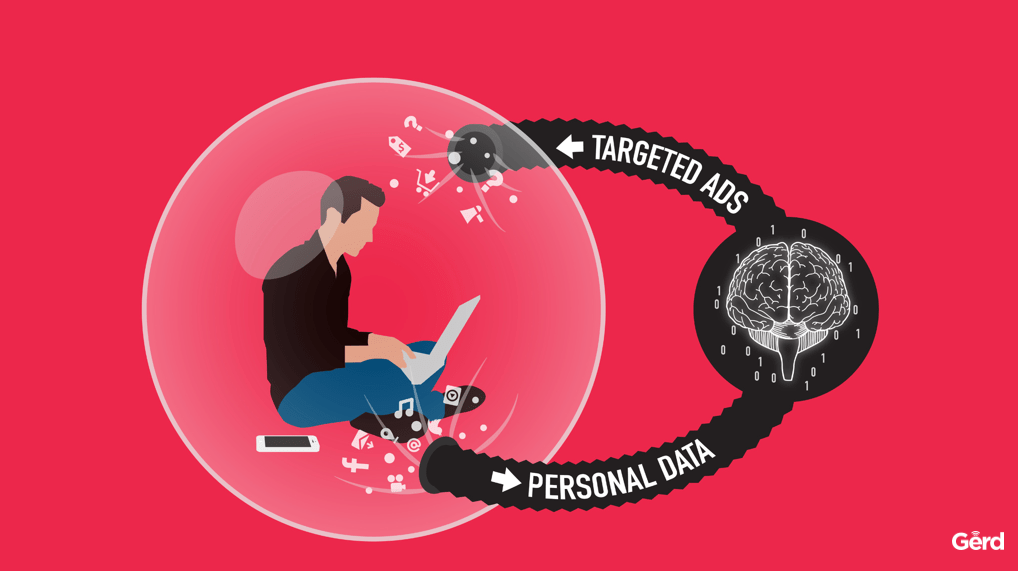
    Every click on Social media is controlling human beings, A clicking on brain in order to get manipulated
    Do you control your clicks or your clicks control you ? Picture credits : Pixabay

    The erosion of privacy is a shared trait between Orwell’s world and ours. Consider the information you willingly share on your social media – your location, interests, relationship status, and more. These details contribute to algorithms’ ability to understand you and create content that aligns with your preferences.. Algorithms exploit this openness to tailor content delivery. This exchange of privacy for convenience resonates with the novel’s themes, where privacy was a scarce commodity traded for societal order.

    Study : A study conducted by Kaspersky in 2021 revealed that 57% of users are uncomfortable with the amount of data collected about them online. Despite this discomfort, users often continue to engage with platforms, inadvertently surrendering their personal information in exchange for seamless experiences.

    Shaping Reality: Manipulation of Information

    In ‘1984,’ the party manipulated historical records to maintain control over truth. Similarly, algorithms can prioritize certain content over others, potentially molding users’ perspectives and knowledge. The digital realm becomes a reflection of the novel’s dystopian society, where information was not a fact but a malleable concept.

    What is filter bubble and how it works

    Study: A research paper titled “The Filter Bubble: What the Internet Is Hiding from You” by Pariser (2011) discusses how algorithms create filter bubbles, limiting exposure to diverse viewpoints. This algorithmic curation shapes the information landscape and influences users’ understanding[ of reality.

    The Echo Chamber Effect

    Source : A person caged in a bubble of echo chamber taken from Technology vs. Humanity website

    Both Orwell’s world and today’s digital landscape give rise to echo chambers, spaces where individuals are exposed only to ideas that reinforce their existing beliefs. In ‘1984,’ this reinforced conformity, while in the digital age, it contributes to the polarization of societies, hindering meaningful dialogue and understanding.

    Echo chambers created by social media algorithm very well explained

    Study: A study published in the Proceedings of the National Academy of Sciences in 2018 explored the phenomenon of echo chambers on social media platforms. The study found that users are more likely to engage with content that aligns with their existing beliefs, leading to the amplification of ideological divisions.

    Diminishing Critical Thinking

    Social media platforms prioritize content that garners high engagement. If users engage more with sensational or emotionally charged content, the algorithm will show more of the same, potentially steering you away from balanced, thought-provoking content. Orwell depicted a society devoid of independent thought, a concept mirrored in the digital realm by algorithms tailoring content to users’ existing preferences. By limiting exposure to diverse viewpoints, algorithms inadvertently discourage critical thinking, drawing a concerning parallel with the thought control mechanisms in ‘1984.’

    Study: A study published in the journal ‘Information, Communication & Society’ in 2016 discussed the potential negative impact of algorithmic content curation on critical thinking. The study emphasized that algorithmic filtering can create cognitive biases and hinder users’ ability to evaluate information objectively.

    Manipulation Redefined

    Just as Orwell’s party used propaganda to manipulate citizens, algorithms subtly influence user behavior by suggesting content, products, and even shaping political decisions. The distinction between external manipulation and self-determined choice becomes blurred as we navigate an online landscape carefully curated by algorithms.

    Study: A study published in the journal ‘Proceedings of the National Academy of Sciences’ in 2014 examined how emotions can be spread through social networks via algorithmic exposure. The study’s findings underscore the potential of algorithms to impact user emotions and behaviors.

    Erosion of Trust and Information Integrity

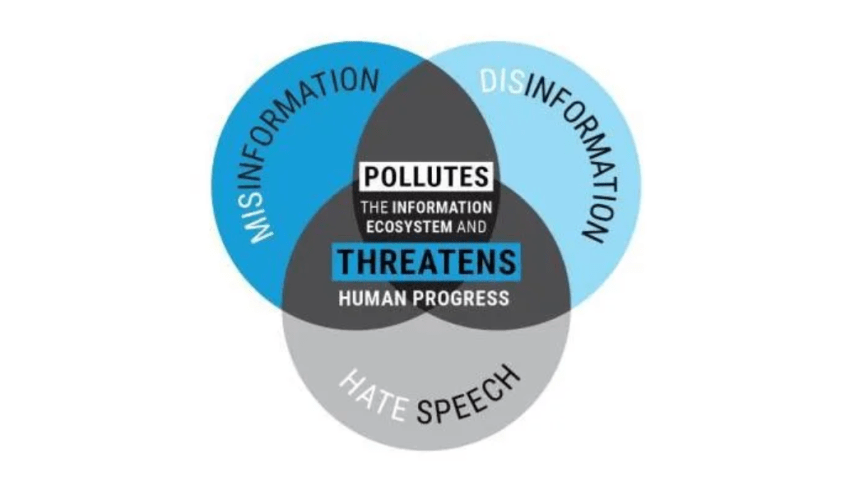
    An infographic about information integrity by UN

    false information that is disseminated intentionally to cause serious social harm”. Disinformation is described by the United Nations Educational, Scientific and Cultural Organization (UNESCO) as false or misleading content that can cause specific harm, irrespective of motivations, awareness or behaviors. 

    The viral spread of conspiracy theories, unverified claims, and doctored images on social media platforms highlights the challenge of maintaining information integrity. Such instances undermine the credibility of online information sources. In ‘1984,’ the party distorted truth to maintain control, akin to the distortion of facts in today’s misinformation-laden digital environment. The spread of fake news erodes trust in institutions, much like the party’s manipulation of information erodes trust in reality. The challenge of discerning truth from falsehood becomes an inherent struggle.

    Study: A study conducted by the Reuters Institute for the Study of Journalism in 2020 found that people’s trust in news and information sources is declining due to the proliferation of misinformation on social media platforms. Algorithms contribute to the dissemination of both accurate and false information, blurring the lines between reliable sources and unreliable ones.

    The Isolation Paradox

    Surrounded by people yet lonely
    Picture credit : Pixabay

    Spending hours scrolling through social media feeds might create an illusion of connection, but studies show that excessive social media use can lead to feelings of loneliness and isolation, as it replaces meaningful face-to-face interactions. Orwell’s society was marked by isolation, where personal connections were scarce.  Paradoxically, our hyper-connected digital age, driven by algorithms, has also led to increased social isolation. As the sense of genuine human connection diminishes, echoing the themes of detachment in ‘1984.’

    Study: A study published in the American Journal of Preventive Medicine in 2017 linked high social media usage to increased feelings of social isolation among young adults. The study suggested that excessive use of social media, driven by algorithmic content delivery, can lead to a sense of disconnection from real-life relationships.

    Navigating the Algorithmic Landscape: Future Concerns

    As algorithms continue to evolve, concerns about algorithm awareness, transparency, and ethical considerations come to the forefront. The unintended consequences of algorithmic decision-making, such as filter bubbles and algorithmic bias, mirror the complexities faced by citizens in ‘1984.’ Striking a balance between technological advancement and ethical use of algorithms is crucial for shaping a positive digital future.

    Study: A study published in the journal ‘Science‘ in 2018 demonstrated that certain algorithms used in healthcare settings exhibited racial and gender bias, potentially leading to unequal treatment. This study underscores the importance of scrutinizing algorithms for biases that could perpetuate societal inequalities.

    Unforeseen Outcomes of Algorithmic Complexities

    Protagonist, Winston, ignited a rebellion with unforeseen consequences. Similarly, the intricate nature of algorithms could lead to outcomes that were never intended. This unpredictability poses challenges as we navigate a digital world where the consequences of our clicks are far-reaching and potentially profound.

    Study: A study published in the journal ‘Nature Communications’ in 2020 discussed the challenges of predictability and control in complex systems, drawing parallels to algorithmic decision-making. The study highlighted that even well-designed algorithms can produce unintended outcomes due to their interaction with complex environments.

    The Battle for Controlled Narratives

    In both realms, the control of information distribution shapes public narratives. In the digital age, algorithms wield similar influence, determining which information reaches users, thereby shaping perspectives and potentially consolidating power in the hands of tech giants.

    Study: A study published in the ‘Journal of Communication’ in 2019 discussed the power dynamics in algorithmic content curation. The study emphasized that the algorithmic selection of information influences users’ perceptions of reality and their understanding of social issues.

    Algorithm Awareness and Ethical Considerations

    The increasing prevalence of algorithms in our lives demands greater algorithm awareness and ethical considerations. Just as citizens in ‘1984’ were unaware of the extent of surveillance, many users today are unaware of how algorithms shape their online experience. Calls for algorithmic transparency and accountability echo the need for ethical considerations in technology-driven societies.

    Confronting the Parallels

    In summary, the uncanny parallels between Orwell’s ‘1984’ and the contemporary algorithm-driven digital world are impossible to overlook. From surveillance and data collection to manipulation of information and societal impacts, the echoes of dystopia reverberate through the fabric of our digital existence. While technology empowers us, it also challenges us to safeguard our privacy, autonomy, and the integrity of information.

    Reflecting on Our Path Forward

    The profound words of Thomas Jefferson, “The price of freedom is eternal vigilance,” resonate more than ever in a world where clicks shape our reality. The prescient observation by Marshall McLuhan, “We shape our tools, and thereafter our tools shape us,” is a call to introspection as we navigate the intricate interplay between technology and society. As we continue to embrace the potential for progress, let us not forget the lessons of ‘1984’ and strive to ensure that our clicks empower us, rather than control us.

    About the blog

    Join CyberZen on this transformative journey, where CyberWisdom unravels the digital maze, leading to a conscious, compassionate, and connected global community. Don’t forget to follow me on:

    Newsletter

    Subscribe to my email newsletter for the knowledge that equip you with to take control of your digital life.

    Designed with WordPress.com

  • Digital Betrayal: How Snapchat and Instagram Sexting Plunge Minors into Darkness

    Digital Betrayal: How Snapchat and Instagram Sexting Plunge Minors into Darkness

    Sending a sexually explicit message or photo may seem like a harmless fun activity, but for minors, it can lead to serious legal and emotional consequences. According to a survey conducted by the Cyberbullying Research Centre, 15% of teens have sent a sexually explicit message, and 22% have received one.

    The rise of social media platforms has given young people a new way to explore and express their sexuality through sexting. However, this dangerous practice can have serious legal, emotional, and social consequences, especially for minors. In this article, we will explore the risks of sexting on Instagram and Snapchat and suggest ways to protect our young generation from the fallout.

    The Dangers of Sexting on Instagram and Snapchat

    The virtual world has expanded beyond the boundaries of the physical world, and young people have pushed the limits by sharing personal information in the form of texts, photos, and videos with both friends and strangers on social media platforms like Instagram and Snapchat. While the 21st-century internet has provided us with liberty, it also comes with the responsibility of handling it maturely. Unfortunately, not everyone is capable of doing so, and minors, in particular, can easily fall prey to the dangers of sexting.

    Legal Repercussions

    Minors who engage in sexting are often unaware that sharing explicit content in the form of texts, photos, and videos is illegal for underage individuals. According to a study by the Crimes Against Children Research Centre at the University of New Hampshire, approximately 15% of teenagers have sent sexually explicit messages or images of themselves to others, and one-third of those who have sent such messages have sent them to people they have never met.

    Sexting is not defined or addressed by any law in India. But it may attract the following provisions Section 67B deals with severe penalties for sharing child pornography electronically. In India, Under Section 14 of the POCSO Act, 2012 whoever uses a child or children for pornographic purposes shall be punished with imprisonment of either description which may extend to five years and shall be liable to fine.

    Furthermore, adults who engage in sexting with minors can face criminal charges for child sexual exploitation, possession of child pornography, and other related offences.

    Emotional Repercussions

    The emotional impact of sexting can be particularly devastating for minors. If explicit photos or messages are leaked, the individual can be subjected to cyberbullying or harassment, leading to long-lasting emotional scars. In some cases, these emotional consequences can lead to clinical problems like depression, suicidal thoughts, and generalized anxiety disorder. Even if the images or messages are shared without consent, this can lead to trust issues and damage personal and platonic relationships. According to a study by the American Psychological Association, sexting among adolescents is associated with a greater likelihood of engaging in risky sexual behaviors and experiencing sexual coercion.

    Cyberbullying and Harassment

    Sexting can make minors vulnerable to cyberbullying and harassment, especially if the content is shared without their consent. In such cases, the emotional impact can be severe, and the victim may feel ashamed, embarrassed, and humiliated. This can lead to further bullying and harassment, making it difficult for the victim to escape the situation. A study by the Cyberbullying Research Centre found that 12% of teens have reported being threatened or harassed online due to sexting, and 5% have reported being pressured to send sexual content.

    Increased Risk of Sexual Exploitation

    Once a message or image is sent, it can be forwarded to unintended recipients, which can have severe consequences. For instance, images or videos can be shared online without the sender’s consent, which can lead to humiliation and negative social consequences. Hence, minors who engage in sexting are at an increased risk of sexual exploitation, both online and in the real world. Paedophiles can easily exploit these vulnerable individuals, and the consequences can be severe. A study by the National Society for the Prevention of Cruelty to Children found that 40% of young people who had sent explicit images reported that those images had been shared without their consent.

    Damage to Online Reputation

    In the digital age, online reputation is as important as the offline reputation of an individual. Whether it is higher education or a professional career, everyone does background verification before on boarding. In the case of sexting, it can be very difficult to apply for higher education or even get employed in a reputable organisation. According to a study by the Cyberbullying Research Centre, 24% of teens who have sent or received explicit content reported negative consequences in their academic or professional lives.

    Possible Causes Why Minors Indulge in Sexting

    Understanding the underlying causes of minors engaging in sexting can help address the issue effectively. While the algorithm of Instagram and Snapchat may contribute to the exposure of explicit content, there are other factors at play as well:

    ·   Not So Diversified Social Group

    Having a limited social group can also be a reason for minors indulging in sexting. When individuals are surrounded by the same type of content, it can create a monotonous timeline that lacks diversity. This lack of exposure to different perspectives and interests may contribute to curiosity and experimentation with sexting.

    ·   Peer Pressure

    Adolescents may feel pressured by their peers to engage in sexting behavior as a way to fit in or gain popularity. The fear of being left out or being judged by peers can push young individuals to participate in activities they may not fully understand the consequences of.

    ·   Lack of Awareness

    Some adolescents may not fully understand the potential risks and consequences of sexting, such as the possibility of the images being shared without their consent or the potential legal consequences. Lack of comprehensive sex education or guidance from adults can leave minors unaware of the potential dangers involved.

    ·   Sexual Curiosity

    Adolescents are naturally curious about sex and sexuality, and sexting may be seen as a way to explore their sexual interests. The ease of access to explicit content online and the influence of media can contribute to heightened curiosity and experimentation.

    ·   Attention-Seeking Behaviour

    Some adolescents may engage in sexting as a way to seek attention or validation from others. In a hyper connected world where social validation plays a significant role, young individuals may turn to sexting as a means of gaining attention or feeling desired.

    ·   Coercion

    Unfortunately, some adolescents may be coerced or pressured into sexting by their partners or others. Manipulative individuals may exploit vulnerabilities and use emotional tactics to convince minors to engage in sexting, creating an unhealthy power dynamic.

    How to Help yourself?

    Cyber Civil Rights Initiative (CCRI): CCRI is a nonprofit organisation that offers resources and support for individuals who have experienced non-consensual image sharing, also known as “revenge porn.” They provide guidance on how to take legal action, remove explicit content from the internet, and cope with the emotional aftermath.

    Childline India Foundation: Childline India Foundation is a helpline dedicated to protecting children’s rights and well-being. Minors in India facing issues related to sexting can reach out to Childline for assistance.

    Helpline: 1098

    How to Save Our Young Generation?

    Preventing underage sexting requires a multi-faceted approach that involves parents, educators, and policymakers. Let’s explore some ways to protect our young generation from the risks of sexting:

    Discuss the Permanence of Digital Content: Help your child understand that anything shared online, including sexts or explicit content, can be permanent and may have long-term consequences. Remind them that even if they delete something, it can still be retrieved or shared by others.

    Role of Parental Control Tools: Parents can take an active role in protecting their children by monitoring their online activity, setting boundaries, discussing the potential risks and consequences of sexting, and utilizing parental control tools. Tools such as 

    1. FamiSafe parental control software
    2. Windows Family Safety
    3. Kaspersky Total Security
    4. kidlogger Parental Control
    5. OpenDNS FamilyShield
    6. Mobicip
    7. Surfie
    8. Net Nanny Parental Control
    9. Norton Online Family
    10. Kids Watch Pro

    can help parents limit their child’s access to certain content and applications, track their online activity, and set time limits for device usage. By combining these strategies, parents can help reduce the risk of their children engaging in sexting behaviours.

    Role of Digital Parenting

    Digital parenting plays a crucial role in guiding children to have a healthy and responsible digital experience. Parents should impart digital Sanskar to their children, which includes teaching them to capitalise on online opportunities, while staying away from threats and dangers of the online world. 

    Teach Responsible Digital Citizenship

    Instil the values of responsible digital citizenship in your child. Teach them about empathy, respect, and the importance of considering the consequences of their actions online. Encourage them to be mindful of their digital footprint and how it can impact their future.

    Highlight the Importance of Consent: Teach your child about the significance of consent in any form of communication, online or offline. Emphasise that sharing explicit content without someone’s consent is not only disrespectful but also illegal.

    Set Clear Boundaries: Establish clear rules and boundaries regarding internet usage and device access. Discuss what kind of content is appropriate to share and what is not, and the consequences of breaking these rules.

    Educate on Privacy and Online Safety: Teach your child about the importance of privacy and the potential risks of sharing personal information online. Help them understand the significance of maintaining control over their own digital identity and the potential consequences of sharing explicit content.

     Open and Honest Communication

    Establish an environment of trust and open communication with your child. Talk to them about the potential dangers of sexting, including the legal and emotional consequences. Encourage them to approach you if they have any concerns or questions.

     Foster the growing importance of Internet Maturity: Help your child develop internet maturity by guiding them to make responsible choices online. Teach them critical thinking skills, how to verify information, and how to recognize and handle inappropriate or harmful content. Encourage them to think before they share anything online.

     Bottom Line

    In conclusion, while social media platforms like Snapchat and Instagram have revolutionised communication and connectivity, they have also introduced new risks, particularly in the realm of sexting. For minors, engaging in sexting can lead to serious legal, emotional, and social consequences. The consequences of such actions can have a lasting impact on their lives, affecting their mental health, personal relationships, and future prospects.

    To protect our young generation, it is essential to raise awareness about the dangers of sexting and provide comprehensive sex education. Parents, educators, and policymakers must work together to promote responsible digital citizenship and teach minors about the importance of privacy, online safety, and responsible internet usage.

    Empowering minors with the knowledge and understanding of the potential risks and consequences of sexting can help them make informed decisions and avoid falling into the darkness of digital betrayal.

    FAQs

    1. Is sexting always illegal?

    While sexting itself may not be explicitly illegal in all jurisdictions, sending explicit content involving minors can lead to severe legal consequences, especially for adults involved in such activities with minors.

    2. Can sexting lead to cyberbullying?

    Yes, if explicit content is shared without consent, it can lead to cyberbullying and harassment, causing emotional distress to the individuals involved.

    3. How can parents protect their children from sexting risks?

    Parents can protect their children by maintaining open communication, setting boundaries, and utilising parental control tools to monitor their online activity.

    4. Are there any long-term emotional consequences of sexting?

    Yes, sexting can lead to long-lasting emotional scars, including depression, anxiety, and trust issues, particularly if the content is shared without consent.

    5. What role does digital parenting play in preventing sexting?

    Digital parenting is crucial in guiding children to have a responsible and safe digital experience. It involves teaching them about privacy, online safety, and responsible digital citizenship.