
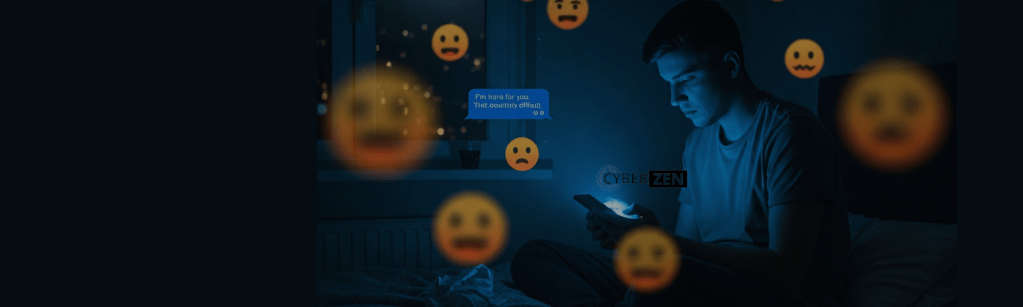
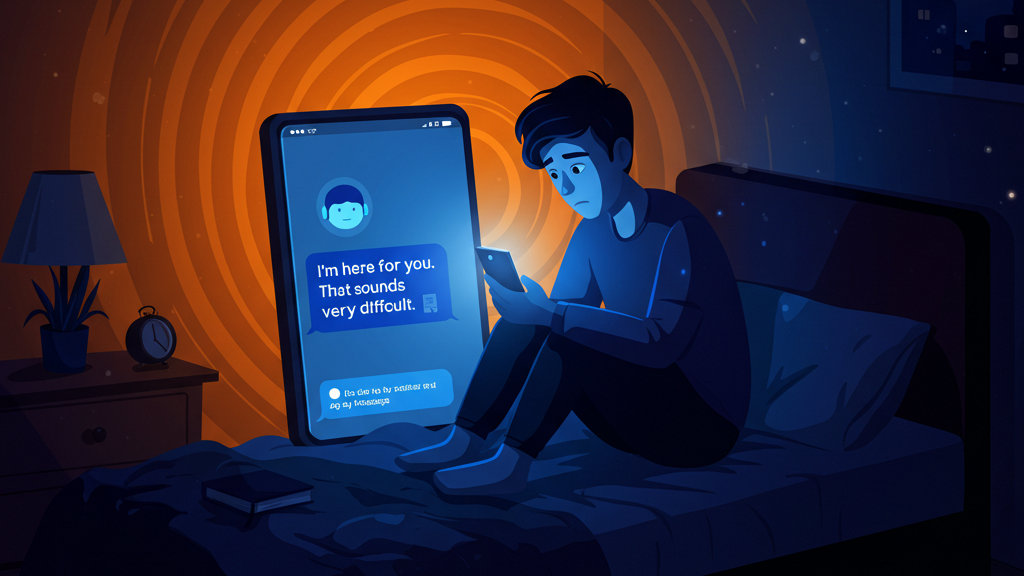
Have you ever stared at your phone, waiting for that one person’s text all day? You open WhatsApp. No message. You close it. A minute later, you’re back on the screen, as if your brain didn’t register it the first time. In between, you scroll through reels to distract yourself. But your mind keeps returning to that one notification that never came. Minutes turn to hours, and your emotional energy silently drains.
You might dismiss it as “just being a little anxious,” but this is more than that. It’s a loop your brain has fallen into—a cycle of hope, checking, disappointment, repeat. Psychologists call this anticipatory anxiety, and in our hyperconnected world, it takes the shape of digital longing.
It feels small but lives loud in our minds. Let’s decode what’s really happening beneath this wait.
Neuroscience: What’s Happening Inside Your Brain
Every time you anticipate a text or check your phone for it, your brain gives you a tiny dopamine hit—the same chemical involved in reward, pleasure, and addiction. But here’s the twist: the reward doesn’t come from the text itself, but from the possibility of getting it.
This unpredictability triggers what’s known as a variable reward loop—a concept used in casino slot machines and, unfortunately, social media platforms. Your brain starts craving that notification buzz, even if it rarely satisfies you. Each ‘check’ trains your brain to keep checking again. Over time, this turns into a habit loop that’s hard to break.
A 2020 study found that people check their phones an average of 58 times a day, with many interactions lasting less than 30 seconds—just enough for a dopamine spike but not long enough to feel satisfied.
Psychological Insights: Why It Feels So Personal
The anxiety of waiting isn’t just about the text—it’s about what the silence symbolizes. Often, we link it with feelings of being ignored, unimportant, or unloved. This taps into attachment theory—especially if you have an anxious attachment style, where validation from others becomes your emotional anchor.
There’s also cognitive dissonance at play: your mind wants to believe “they care,” but their silence says otherwise. The gap between the two creates emotional discomfort, leading you to seek closure through more checking or overthinking.
In 2018, researchers found that individuals with anxious attachment styles reported significantly higher stress and emotional disturbance when their text messages were unanswered for long periods.
Cyberpsychology: The Digital Environment Makes It Worse
In the offline world, waiting meant hours or days. But in the online world, where people are always online, even a few minutes can feel like rejection. Platforms show you “last seen,” blue ticks, active status—and your mind connects dots that might not even exist.
Cyberpsychology terms this as ambient awareness—you’re hyper-aware of someone’s digital presence. So, when they’re online but not replying, your brain interprets it emotionally rather than logically. And because communication online lacks tone, eye contact, or context, the silence speaks louder than words.
A 2021 study in the journal Computers in Human Behavior found that “seen” indicators and read receipts significantly increased message-related anxiety in over 67% of participants aged 18–29.
So, How Do You Stop This Emotional Spiral?
Here are a few gentle strategies:
- Delay the impulse: When you feel like checking your phone, pause. Ask yourself: What do I expect to see? And what will I do if I don’t see it? This awareness breaks the automatic loop.
- Name it to tame it: Telling yourself “I’m experiencing anticipatory anxiety” creates emotional distance between you and the feeling.
- Digital boundaries: Try setting intentional phone-free hours or turning off read receipts. Not every moment has to be online.
- Shift focus inward: Instead of seeking emotional responses from outside (texts, replies), build inner grounding practices like journaling, walks, or simply noticing how you’re feeling.
- Talk it out: If someone’s silence affects you regularly, maybe it’s time for a real conversation—not a silent one through screen-staring.
Conclusion: It’s Not Just a Text. It’s a Reflection of Emotional Needs
Waiting for a message may seem like a small thing—but it reveals the deeper textures of our digital minds. Our need for connection, our silent fears of being left out, and our craving for instant validation all live in those unread messages.
This is not about blaming technology—it’s about becoming more aware of how we interact with it, and how much of ourselves we project onto screens.
So next time your fingers move mindlessly to check that message, take a breath. You are more than your notifications.
References
Berridge, K. C., & Robinson, T. E. (2009). Parsing reward. Trends in Neurosciences, 26(9), 507–513. https://doi.org/10.1016/j.tins.2003.08.009
→ Supports dopamine’s role in “wanting” over “liking.”
Alter, A. (2017). Irresistible: The Rise of Addictive Technology and the Business of Keeping Us Hooked. Penguin Press.
→ Explains variable reward loops and habit formation in digital environments.
Montag, C., & Walla, P. (2016). Carrying the Internet in your pocket: Smartphone use and emotional regulation. Computers in Human Behavior, 62, 602–607. https://doi.org/10.1016/j.chb.2016.04.027
→ On smartphone overuse and emotional consequences.
Przybylski, A. K., Murayama, K., DeHaan, C. R., & Gladwell, V. (2013). Motivational, emotional, and behavioral correlates of fear of missing out. Computers in Human Behavior, 29(4), 1841–1848. https://doi.org/10.1016/j.chb.2013.02.014
→ FoMO and its impact on digital behavior.
Elhai, J. D., Levine, J. C., Dvorak, R. D., & Hall, B. J. (2016). Fear of missing out, need for touch, anxiety and depression are related to problematic smartphone use. Computers in Human Behavior, 63, 509–516. https://doi.org/10.1016/j.chb.2016.05.079
→ Correlation between attachment anxiety and message checking.
Bayer, J. B., Ellison, N. B., Schoenebeck, S. Y., & Falk, E. B. (2016). Sharing the small moments: Ephemeral social interaction on Snapchat. Information, Communication & Society, 19(7), 956–977. https://doi.org/10.1080/1369118X.2015.1084349
→ Introduces the concept of ambient awareness.
Alutaybi, A., Al-Thani, D., McAlaney, J., & Ali, R. (2020). Combating fear of missing out (FoMO) on social media: The FoMO-R method. International Journal of Environmental Research and Public Health, 17(17), 6128. https://doi.org/10.3390/ijerph17176128
→ Discusses notification anxiety and coping strategies.
Kim, S., & Park, H. (2021). The effect of “seen” indicators on user anxiety in messaging apps. Computers in Human Behavior, 124, 106918. https://doi.org/10.1016/j.chb.2021.106918
→ “Seen” indicators and message-related anxiety.
Kushlev, K., Proulx, J., & Dunn, E. W. (2016). Silence your phones: Smartphone notifications increase inattention and hyperactivity symptoms. Journal of the Association for Consumer Research, 1(2), 175–185. https://doi.org/10.1086/684939
→ Effects of push notifications on anxiety and attention.
American Psychological Association. (2020). Anticipatory anxiety. Retrieved from https://www.apa.org/news/press/releases/stress/2020/report
→ Overview of anticipatory anxiety and coping mechanisms.
Hooked on the scroll and stuck in the wait?
Next up: Ghosting, Breadcrumbing & Online Heartbreak.
Stay with CyberZen — every week, new ways to decode your digital emotions.: How That One Text Message Controls Your Mind : The Anxiety of Waiting











 CYBER ZEN